Abū Bakr al-Zubaydī
Biographical assessment of grammarians, mentioned in the reception of Sībawayh.
Sign in to create personalized posters and printable learning resources.
Biographical assessment of grammarians, mentioned in the reception of Sībawayh.
Kitāb al-muʿammarīn min al-ʿArab, a work about long-lived Arabs shown through a manuscript copy.
Arabic grammatical scholarship and the reception of Sībawayh’s al-Kitāb.
Taught syntax and literature to al-Zamakhsharī.
English translations of classical Islamic texts and work making Islamic learning accessible to English readers.
Arabic grammar and grammatical debate, discussed alongside Sībawayh.
Linguistic and rhetorical interpretation of the Qur’an in al-Kashshāf.
Arabic teaching in Toronto and online, commemorated in an obituary post.
Research on manuscripts, printing, and the dissemination of scientific knowledge in Islamic societies.
Latin translation of Arabic scientific writing, including work attributed to al-Nayrīzī.
Korean translations of the Qur’an and Ṣaḥīḥ al-Bukhārī, and Islamic authorship.
Literary preparation of Ibn Baṭṭūṭa’s travel account from his dictated recollections.
Edited al-Sijistānī’s work using photographs of a Cambridge manuscript, according to the source caption.
Latin translation of al-Farghānī’s astronomical textbook, dated to 1135 in the collected posts.
The Dīwān Lughāt al-Turk dictionary, examples of Turkic poetry, and a map of Turkic-speaking regions.
Translation of the Qur’an into Chinese.
Japanese translations of Tafsīr al-Jalālayn and other classical Islamic texts.
An Arabic autobiography documenting his life after enslavement in the United States.
Latin translation of al-Khwārizmī’s algebra, dated to 1145 in the source.
Al-Kitāb and the systematization of Arabic grammar.
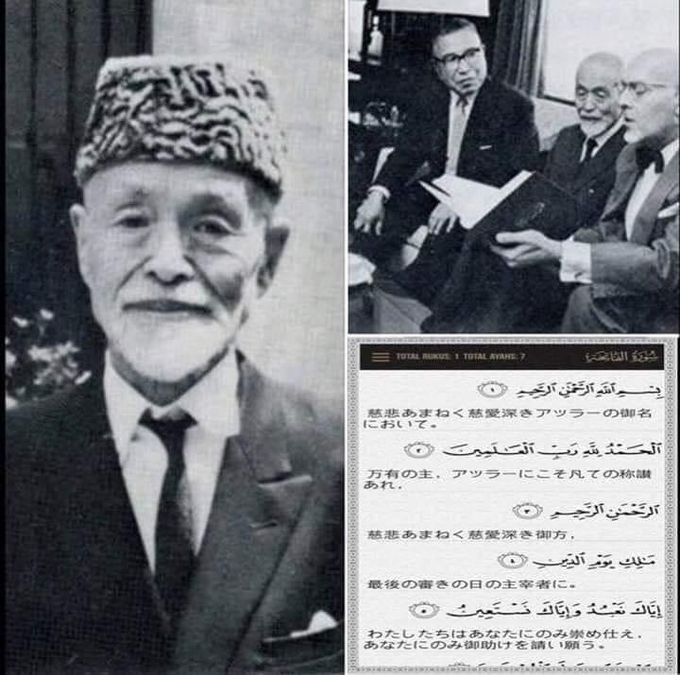
Umar Mita learned languages to help people understand one another. His Japanese translation of the Qur’an was published in 1972 after years of study and revision.
Co-translated the Qur’an into English with Aisha Bewley, according to her collected biography.